How Do I Know If My Tree Is Dead or Just Dormant in Eugene?
How Do I Know If My Tree Is Dead or Just Dormant in Eugene?
Dormant trees retain living buds and flexible twigs and usually show a consistent seasonal pattern. A dead or severely declining tree may have dry brittle twigs, absent viable buds, peeling bark, widespread canopy dieback, and no green tissue beneath a small bark sample.
This Eugene-focused guide explains the decision points homeowners, landlords, HOA boards, and property managers should understand before requesting work. It is general information, not a substitute for an on-site assessment, utility direction, insurance coverage decision, or legal advice.
Why the Answer Depends on the Tree and Site
Eugene properties combine mature Pacific Northwest trees with homes, sidewalks, narrow side yards, rental housing, commercial parking, and overhead utilities. Wet winter soil, wind, occasional ice, summer drought, and construction can change how trees grow and fail. The useful question is not only what the tree looks like, but what has changed and what lies within reach.
A smaller tree beside an occupied building can deserve more attention than a taller tree in an open area. Species, roots, trunk condition, crown structure, targets, access, and the purpose of the work all belong in the same decision.
Key Factors to Evaluate
A tree professional will usually consider:
- species and normal leaf-out timing
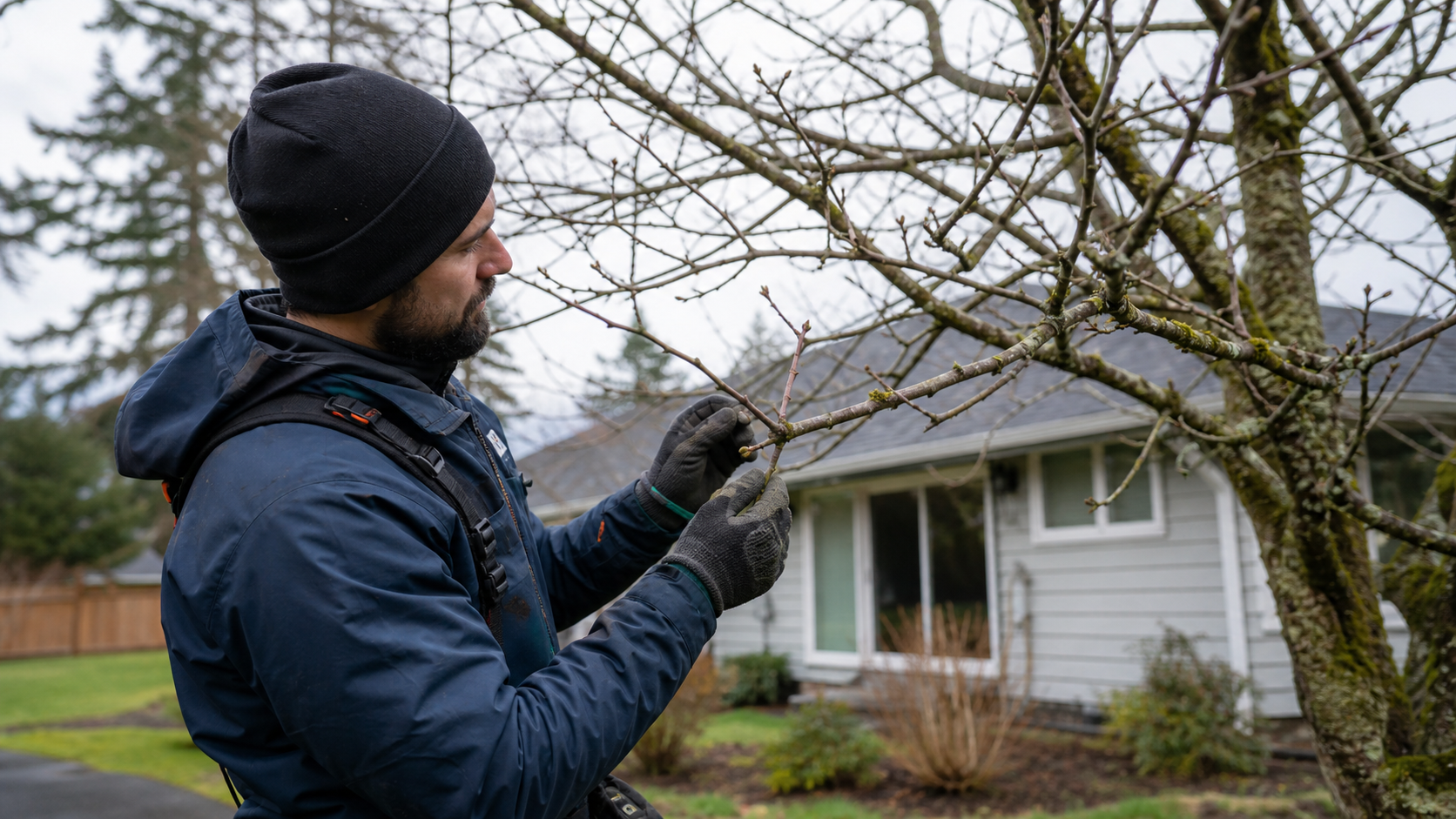
- living buds, twig flexibility, and green cambium on a small test area
- distribution of dead twigs versus whole-crown failure
- recent drought, freeze, transplanting, root injury, or construction
- decay, fungal fruiting bodies, insects, and bark condition
Those details help distinguish routine maintenance from an urgent hazard. They also determine whether the practical response is monitoring, selective pruning, supplemental support, stump grinding, full removal, utility coordination, or a more detailed assessment.
What to Do Next
- compare the tree with others of the same species nearby
- check several small twigs rather than damaging the main trunk
- look for buds and live tissue from lower to upper crown
- request diagnosis when a large tree could shed dead wood
If a tree is actively falling, resting on a structure, blocking an exit, or touching electrical conductors, keep people away and contact the appropriate emergency service or utility. Take photographs only from a safe location.
What a Clear Professional Scope Should Include
A written scope should identify the tree and explain what will be assessed, pruned, supported, removed, ground, hauled, or left on site. It should address access, nearby property, cleanup, permits or utility coordination when applicable, and limits created by hidden decay, underground conflicts, weather, or site conditions.
For this question, start with tree assessments in Eugene, OR. When the correct treatment is uncertain, an assessment before production work can prevent an unnecessary removal or an incomplete pruning plan.
Common Mistakes to Avoid
- declaring a late-leafing species dead too early
- cutting deeply into the trunk for a scratch test
- assuming a few green shoots mean the main structure is sound
Do-it-yourself cutting is especially hazardous when wood is dead, split, leaning, storm-loaded, suspended, or near utilities. A cut can release stored force or change balance without warning.
Related Eugene Tree Service Resources
Relevant services
- Eugene tree service location page
- tree assessments in Eugene, OR
- tree pruning in Eugene, OR
- tree removal in Eugene, OR
Related local guides
- What Are the Signs of a Dangerous Tree in Eugene, OR?
- When Should a Tree Be Removed Instead of Pruned?
- What Is Included in a Professional Tree Risk Assessment?
Official Sources and Further Reading
Rules and agency guidance can change, so check current sources before acting:
Frequently Asked Questions
What is a scratch test?
A light check beneath thin bark can reveal green living tissue, but it should be small and used with other evidence.
Can half a tree be dead?
Yes. Root loss, vascular damage, decay, and branch failure can produce one-sided dieback.
Should a dead tree be removed immediately?
Urgency depends on size, stability, and what it can strike; dead wood continues to weaken.
Get a Tree-Specific Recommendation in Eugene
Eugene Tree Service can inspect the tree, explain practical options, and prepare a clear scope. Call (541) 515-7257 or request a free estimate online.