Does Homeowners Insurance Cover Tree Removal in Eugene?
Does Homeowners Insurance Cover Tree Removal in Eugene?
Coverage depends on the policy and what happened. Removal may be covered when a fallen tree damages a covered structure or blocks an insured access route, while preventive removal, routine pruning, and cleanup for a tree that falls harmlessly in the yard are often treated differently.
This guide explains what to document and which questions to ask the insurer before authorizing non-emergency work for Eugene homeowners, landlords, HOA boards, and property managers. It is general information, not a substitute for an on-site tree assessment, a utility directive, an insurance decision, or legal advice.
Why the Answer Depends on the Tree and Site
Eugene properties combine mature Pacific Northwest trees with homes, fences, sidewalks, driveways, rental housing, commercial parking, and overhead utilities. Winter rain can saturate soil, wind can expose weak attachments, ice can add unusual weight, and dry summers can stress roots and crowns. A useful recommendation considers both the tree and what lies within reach.
Tree size is only one part of the decision. A smaller tree with severe root movement beside an occupied building may deserve faster action than a taller, healthy tree in an open area. The goal is to identify the actual problem, understand the likely consequence, and choose work that meaningfully improves the situation.
Key Factors for Does Homeowners Insurance Cover Tree Removal
A tree professional will usually consider:
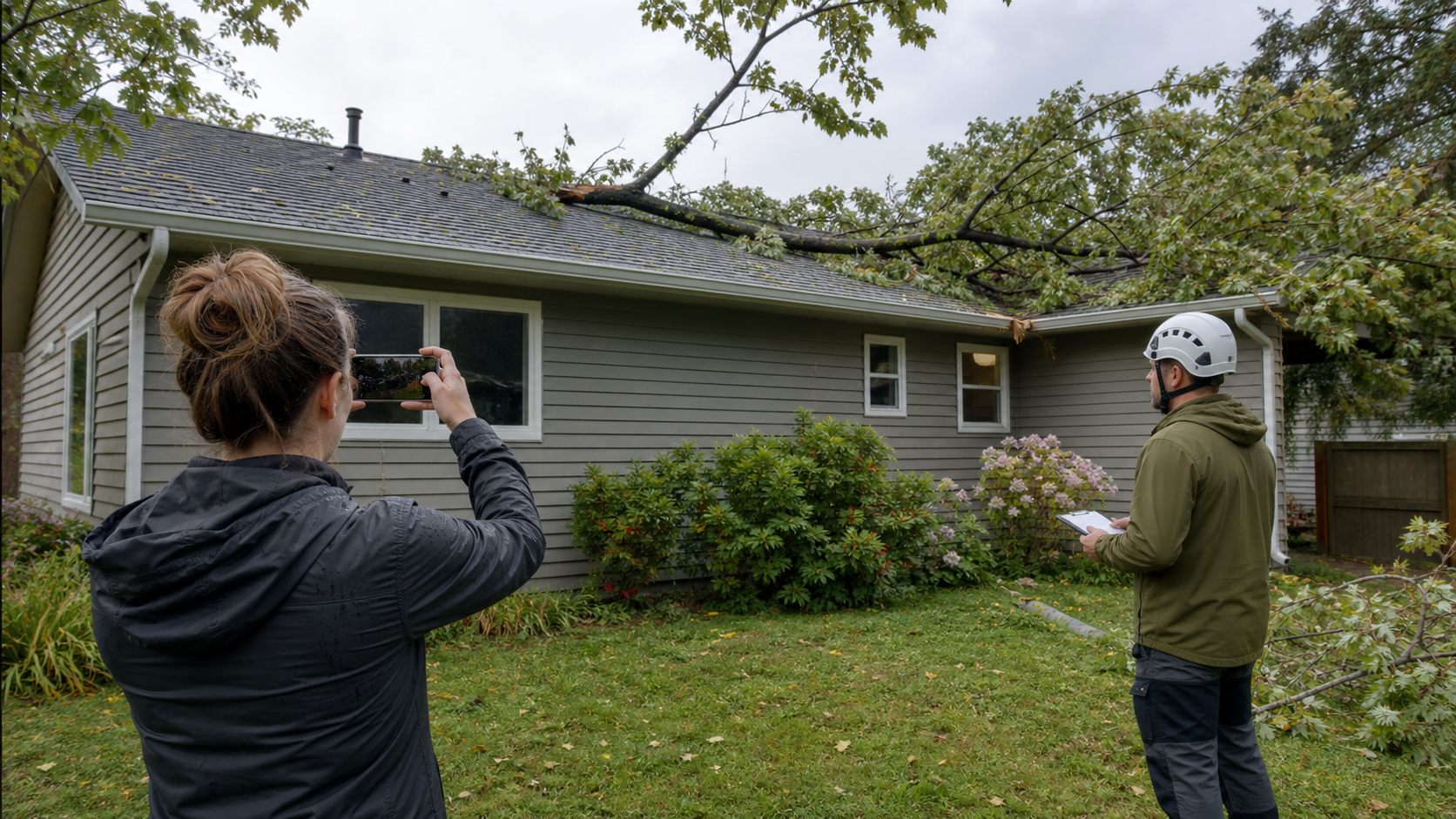
- whether the tree damaged a covered home, detached structure, fence, or vehicle
- whether access is blocked and how the policy defines covered debris removal
- the cause of loss and any relevant exclusions or limits
- whether immediate work is needed to prevent additional damage
- separate costs for stabilization, removal from a structure, hauling, and stump work
These factors help distinguish routine maintenance from an urgent hazard. They also affect whether the practical option is inspection, selective pruning, cabling or bracing, full removal, stump grinding, utility coordination, or monitoring.
What to Do Next
- make the area safe and call emergency services or the utility if there is immediate danger
- photograph the tree, failure point, damage, and surrounding area before cleanup when safe
- contact the insurer and ask about mitigation, estimates, and documentation requirements
- request an itemized tree-service invoice and save all correspondence
If the tree is actively falling, resting on a structure, blocking a critical exit, or touching electrical conductors, keep people away and contact the appropriate emergency service or utility before approaching it. Photos are useful only when they can be taken from a safe location.
What a Clear Tree-Service Scope Should Include
A written estimate should identify the tree and explain what will be pruned, removed, supported, ground, hauled, or left on site. It should also address access, protection of nearby property, cleanup, permits or utility coordination when applicable, and any limits created by hidden decay, underground conflicts, weather, or site conditions.
For this issue, the most relevant starting point is emergency tree removal in Eugene, OR. If the correct solution is not obvious, an assessment before production work can prevent an unnecessary removal or an incomplete pruning scope.
Common Mistakes to Avoid
- assuming every fallen tree is automatically covered
- discarding photos or damaged material before the insurer advises you
- delaying reasonable emergency mitigation while waiting for a routine adjuster appointment
Do-it-yourself cutting becomes especially dangerous when wood is dead, split, storm-loaded, leaning, suspended, or near utilities. A chainsaw cut can release stored force or change the tree's balance without warning.
Related Eugene Tree Service Resources
Relevant services
- Eugene tree service location page
- emergency tree removal in Eugene, OR
- tree removal in Eugene, OR
- tree assessments in Eugene, OR
Related local guides
- Who Is Responsible for a Fallen Tree in Oregon?
- What Should I Do When a Tree Falls on My House?
- How Much Does Tree Removal Cost in Eugene, OR?
Frequently Asked Questions
Will insurance pay to remove a healthy tree before it falls?
Preventive work is commonly considered maintenance, but policy terms vary. Ask your carrier.
What if the tree came from a neighbor's property?
Property ownership alone does not answer the coverage question. Notify your insurer and document the tree and damage.
Is stump grinding part of an insurance claim?
It may be outside the covered emergency scope unless the stump is tied to covered repairs or access. Confirm before authorizing it.
Get a Tree-Specific Estimate in Eugene
Eugene Tree Service can inspect the tree, explain practical options, and prepare a clear scope based on access and cleanup needs. Call (541) 515-7257 or request a free estimate online.